Media Law Central
If you want to talk to a lawyer at ProCon 25, you’ll find them all in one place: Media Law Central.
All media law sessions happen in the same room on the fourth floor of the Marriott Marquis. Those sessions are presented by expert attorneys at the Student Press Law Center (SPLC) and FIRE’s Student Press Initiative (SPFI).

Both of these lofty and nifty organizations will have tables in the nearby exhibit hall, so you can visit them before and after their sessions.
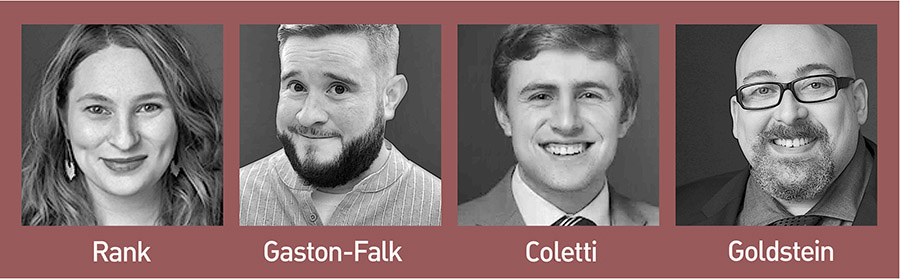
The four speakers below have literally helped hundreds of student journalists and their advisers – for free. While they can’t give you specific legal advice, they can guide you on most free press and First Amendment issues.
Sessions
How to get information through public records
Getting good information is key to good reporting. We’ll talk about the ins and outs of public records requests, how/where that pesky FERPA excuse applies (it usually doesn’t), and what to do if you’re being given the runaround.
Jonathan Gaston-Falk, Student Press Law Center staff attorney
9 a.m. Thursday, February 27
Copyright 101
It’s never been easier – and potentially more risky – to help yourself to photos, videos and music. Join the Student Press Law Center for a copyright primer and tips (and warnings) about finding truly free material that’s safe to re-publish.
Jonathan Gaston-Falk, Student Press Law Center staff attorney
10 a.m. Thursday, February 27
I’m a press lawyer. Ask me anything
It’s no secret that the law can be confusing, and when you’re producing content, there are a lot of things to keep in mind. In this informal discussion, we’ll chat about your burning media law and First Amendment questions.
Lindsie Rank, Student Press Freedom Initiative at FIRE attorney
Jonathan Gaston-Falk, Student Press Law Center attorney
1 p.m. Thursday, February 27
Don’t get sued!
Libel? Privacy? Intellectual property?! When you’re producing a publication, there are so many legal risks to keep in mind. But don’t fear! We’ll go over tips and tricks for reviewing your own content to keep you out of the courtroom and in the newsroom.
Dominic Coletti, Student Press Freedom Initiative at FIRE advocate
2 p.m. Thursday, February 27
Press rights at private schools
Student journalists at private colleges face unique challenges, as First Amendment protections don’t apply directly. This session will explore the legal and policy frameworks shaping press rights at private institutions and offer strategies for navigating censorship, advocating for press freedom, and building support for independent student media.
Lindsie Rank, Student Press Freedom Initiative at FIRE attorney
3 p.m. Thursday, February 27
Covering sexual assault, legally
Title IX is one of the most commonly censored topics, and many colleges have only made it harder by designating student journalists as “mandatory reporters” – stifling source confidentiality. In this session, we’ll discuss tips for overcoming obstacles and finding the information you need to report on these issues responsibly.
Lindsie Rank, Student Press Freedom Initiative at FIRE attorney
4 p.m. Thursday, February 27
The ABCs of L-I-B-E-L
While just saying the word aloud can bring shivers down a journalist’s spine, the basics of libel law – and the keys to avoiding it – are actually fairly simple. Join the Student Press Law Center to clear the fear.
Jonathan Gaston-Falk, Student Press Law Center staff attorney
9 a.m. Friday, February 28
Student press freedom 101
Are you being illegally censored? From content-based budget cuts to battling the university PR machine just to talk to anyone, press freedom challenges can come in many forms. We’ll discuss your rights at public colleges, how to know if it’s censorship and how to recognize if you’re self-censoring without even knowing it.
Jonathan Gaston-Falk, Student Press Law Center staff attorney
10 a.m. Friday, February 28
Copyright fair use in depth
Take a deep dive into the complexities of fair use, the legal doctrine that (sometimes) lets you “borrow” from other creators. This session will unpack the four factors of fair use, explore transformative fair use, and provide practical tips for applying fair use in your publications.
Adam Goldstein, Student Press Freedom Initiative at FIRE attorney
1 p.m. Friday, February 28
Navigating FERPA + student privacy
Student journalists are bound by FERPA. FERPA prevents universities from disclosing findings of responsibility for sexual assault. If information is protected by FERPA, there’s no way to legally get it. These are just some of the myths that we’ll dismantle during this session where you’ll learn the ins and outs of student privacy law and how it affects student journalists.
Adam Goldstein, Student Press Freedom Initiative at FIRE attorney
2 p.m. Friday, February 28
Covering protests, legally
Libel? Privacy? Intellectual property?! When you’re producing a publication, there are so many legal risks to keep in mind. But don’t fear! We’ll go over tips and tricks for reviewing your own content to keep you out of the courtroom and in the newsroom.
Lindsie Rank, Student Press Freedom Initiative at FIRE attorney
3 p.m. Friday, February 28
Silenced sources
Colleges silencing sources – such as RAs and professors – is nothing new. But recent events have brought it to a high point, and student journalists are being told sources can’t speak for fear of their jobs. In this session, we’ll discuss reporter’s privilege and shield laws, source rights, and navigating overbearing source speech regulations.
Dominic Coletti, Student Press Freedom Initiative at FIRE advocate
4 p.m. Friday, February 28
 ProCon 25